
Short answer: Do implants in Midwest City work? Yes — for most patients, dental implants replace missing teeth with a stable, long-lasting solution. This short post explains how implants work, the main benefits, who is a good candidate, risks and recovery, cost basics, and how to choose a trusted provider in Midwest City.
Quick answer: Do implants work for Midwest City patients?
Yes. Dental implants succeed for most people because titanium posts fuse to the jawbone and support crowns or bridges. That bone integration gives implants stability, lets patients chew normally, and leads to high long-term success rates when placed and cared for properly.
What a dental implant is and how it works
Three parts of an implant
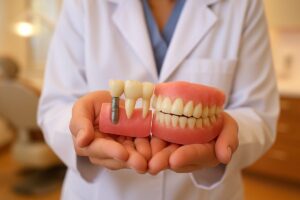
An implant system has three parts: the titanium post (the artificial root placed in bone), the abutment (a connector), and the crown or bridge (the visible tooth). Together they restore function and appearance like a natural tooth.
Osseointegration: the key to success
Osseointegration is when bone grows tightly around the implant post. This biological bond is why implants feel solid and can last many years. Good bone health and proper planning help ensure predictable integration.
Main benefits of dental implants
Restore bite strength and chewing
Implants replace the tooth root, so chewing force is transmitted to bone like with natural teeth. Patients can eat a wider variety of foods without the slipping or weakness that can come with dentures.
Look and feel like real teeth
Custom crowns match shape and color, and implants sit in the jaw the way natural teeth do. This makes them more comfortable and natural-looking than many removable options.
Preserve jawbone and facial shape
When a tooth is lost, the jawbone can shrink over time. Implants stimulate the bone and help prevent the facial changes that occur with long-term tooth loss.
Durability and low maintenance
With good oral hygiene and regular dental visits, implants can last decades. Care is similar to natural teeth: brushing, flossing, and routine checkups.
Who is a good candidate?
Good candidates have healthy gums, adequate bone or willingness to have a graft, and are in generally good health. Non-smokers do best, though those who quit before and during treatment can still succeed. Age alone is not a barrier.
When implants may not be best
Certain conditions can make implants less predictable: uncontrolled diabetes, heavy smoking, some medications, or severe untreated gum disease. In cases of extreme bone loss, grafting may be required before implants are possible.
Risks, recovery, and what to expect
Surgical risks are low but include infection, swelling, and minor bleeding. Healing for the bone to fuse often takes a few months; shorter timelines are possible with modern protocols. Follow-up visits check healing and place the final restoration. Sedation options (oral, nitrous oxide, or IV) are available to keep procedures comfortable.
Cost, insurance, and paying for implants
Costs vary by how many teeth are replaced and the complexity of the case. Some dental plans cover parts of implant treatment; many patients use financing (CareCredit, Cherry, Proceed Finance) to spread payments. A consultation provides an accurate estimate.
Do implants work — choosing the right provider in Midwest City
Choose a team with digital planning, experience, and in-house surgical capability. Dentistry By Design in Midwest City offers digital implant planning, an in-house surgical suite, CEREC same-day crowns, and multiple sedation options to improve comfort and outcomes. Their approach focuses on safety, predictable results, and patient education. If you’re wondering whether to move forward, schedule a consult to review your X-rays and options. A personalized evaluation will confirm whether dental implants in Midwest City are right for you.