Dental Implants vs. Dentures: Pros, Cons and Costs
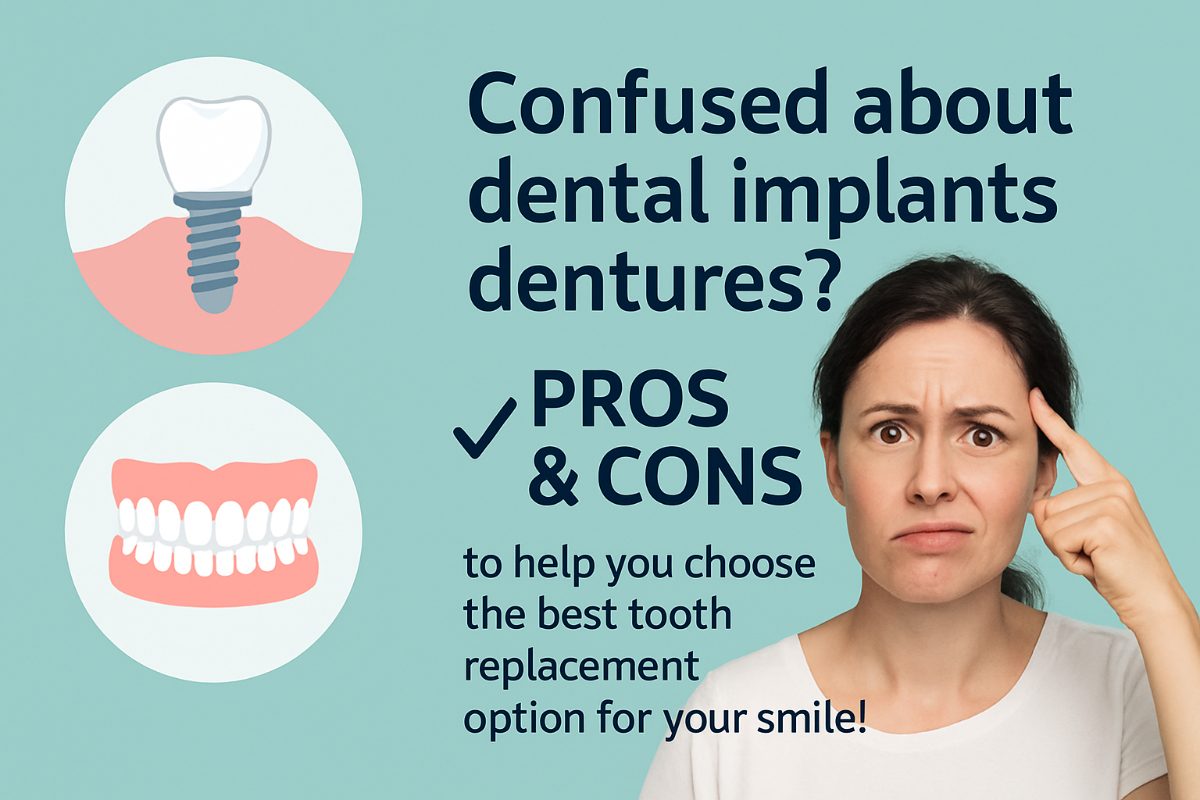
When you need to replace missing teeth, choosing between dental implants and dentures can feel overwhelming. Both options can restore your smile, but they differ in stability, comfort, maintenance, treatment time and long-term cost.
Dental implants in Midwest City, OK provide a fixed or implant-retained foundation for replacement teeth. Traditional dentures are removable appliances that rest on the gums. Implant-supported dentures combine elements of both treatments by securing a removable restoration to dental implants.
The right choice depends on your oral health, jawbone structure, lifestyle, treatment goals and budget. This guide compares the advantages, limitations and potential expenses associated with each option so you can prepare for a personalized consultation.
What Are Dental Implants?
Dental implants are small, biocompatible posts placed within the jawbone. They function similarly to natural tooth roots by supporting a crown, bridge, denture or full-arch restoration.
After an implant is placed, the surrounding bone gradually bonds with its surface through a process called osseointegration. Once adequate healing has occurred, the implant can provide a stable foundation for the replacement tooth or teeth.
Dental implants may be used to support:
- A single crown replacing one missing tooth
- An implant-supported bridge replacing several teeth
- An implant-supported removable denture
- A fixed full-arch restoration
- Upper and lower full-mouth restorations
Patients who need to replace most or all of their teeth can also explore All-on-4® full-mouth dental implants.
What Are Dentures?
Dentures are removable dental appliances designed to replace multiple missing teeth. They contain prosthetic teeth attached to a gum-colored base and are customized to fit the patient’s mouth.
The two primary types are:
- Partial dentures: Replace several missing teeth while some healthy natural teeth remain.
- Full dentures: Replace an entire upper or lower arch of teeth.
Traditional dentures receive support from the gums and underlying oral tissues. Some full upper dentures also rely partly on suction for retention. Adhesive may be used when recommended, although a properly fitted denture should not depend entirely on adhesive to remain in place.
Learn more about the practice’s options for full and partial dentures in Midwest City, OK.
What Are Implant-Supported Dentures?
Implant-supported dentures, sometimes called implant-retained or snap-in dentures, attach to dental implants placed in the jaw. They are generally more secure than conventional dentures but can still be removed for cleaning.
The implants help reduce movement while eating and speaking. They also provide stimulation to the bone immediately surrounding the implant posts.
Implant-supported dentures may be an appropriate middle-ground option for patients who want greater stability than traditional dentures but prefer a removable restoration or are not candidates for a fixed full-arch prosthesis.
Dental Implants vs. Dentures at a Glance
| Consideration | Dental Implants | Traditional Dentures |
|---|---|---|
| Stability | Anchored within the jawbone | Rest on the gums and may shift |
| Removal | May support fixed or removable restorations | Removed daily for cleaning |
| Chewing | Generally provides greater biting stability | May require dietary adjustments |
| Bone support | Stimulates bone around the implants | Does not replace tooth-root stimulation |
| Treatment time | Usually requires surgery and healing | Typically does not require implant surgery |
| Initial cost | Generally higher | Generally lower |
| Ongoing maintenance | Professional care and restoration maintenance | Relines, adjustments, repairs and replacement |
Advantages of Dental Implants
Greater Stability While Eating and Speaking
Because implants are anchored within the jawbone, they can provide a stable foundation for replacement teeth. Patients generally do not have to worry about a fixed implant restoration slipping while they chew, laugh or speak.
This stability can make it easier to eat a varied diet and communicate without the clicking or movement sometimes associated with a loose denture.
A More Natural Feel
Implant-supported teeth are designed to reproduce the appearance and function of natural teeth. Fixed implant restorations remain in the mouth and do not need to be removed at night.
The final appearance depends on the patient’s anatomy, restoration design, materials and treatment plan. Patients considering extensive treatment can view examples on the practice’s before-and-after gallery.
Support for Jawbone Health
Natural tooth roots transfer biting forces into the jawbone. When teeth are lost, the bone no longer receives the same stimulation, which can contribute to gradual resorption.
Dental implants transmit functional forces to the surrounding bone. This may help preserve bone in the areas where the implants are placed, although implants cannot restore all bone that has already been lost.
Independent Replacement of a Missing Tooth
A single dental implant can replace a missing tooth without requiring the adjacent teeth to support a conventional bridge. This allows the neighboring teeth to remain structurally independent when they are otherwise healthy.
Long-Term Treatment Potential
Dental implants are designed for long-term use. Their lifespan depends on oral hygiene, gum health, medical conditions, smoking, bite forces and professional maintenance.
The implant post and attached restoration should be considered separately. Although an implant may remain stable for many years, a crown, bridge or full-arch prosthesis may eventually require repair or replacement.
Disadvantages of Dental Implants
A Higher Initial Investment
Dental implants generally cost more initially than conventional dentures. Implant treatment may include diagnostic imaging, surgery, implant posts, abutments, temporary teeth, laboratory work and a final restoration.
Surgery Is Required
Implant placement is a surgical procedure. Patients must be healthy enough to undergo treatment and follow postoperative instructions. Temporary swelling, soreness, bruising or dietary restrictions may occur during recovery.
Patients who feel anxious about surgery can ask about available sedation dentistry options.
Treatment May Take Several Months
Implants often need time to integrate with the jawbone before receiving the final restoration. The complete timeline depends on the number of implants, healing response, bone quality, treatment design and whether preparatory procedures are required.
Some qualified patients may receive temporary teeth on the day of implant placement, but these are not the same as the final restoration. Eligibility for immediate provisional teeth must be determined through an examination and diagnostic imaging.
Some Patients Need Preparatory Treatment
Bone loss, infection, damaged teeth or certain anatomical conditions may need to be addressed before or during implant surgery. Preparatory procedures may include tooth extractions, bone grafting or other oral surgery.
Learn more about tooth extractions and bone grafting offered at Dentistry By Design.
Advantages of Traditional Dentures
Lower Upfront Cost
Traditional dentures usually have a lower initial fee than implant treatment because they do not require implant posts or surgical placement.
No Implant Surgery
Conventional dentures may be suitable for patients who do not want implant surgery or have health considerations that make surgical treatment less appropriate. Tooth extractions may still be required when damaged teeth remain.
Replacement of an Entire Arch
A full denture can replace all teeth in an upper or lower arch with a single appliance. A partial denture can fill several gaps while preserving the remaining natural teeth.
A Faster Initial Treatment Process
Because conventional dentures do not require implant integration, the initial process may be completed more quickly. Treatment time varies based on whether teeth must be extracted and whether the denture is placed immediately or after healing.
Disadvantages of Traditional Dentures
Possible Movement or Irritation
Dentures rest on movable gum tissue rather than being anchored directly to the jawbone. As a result, they may shift during eating or speaking, particularly if the fit changes over time.
Movement can also create sore spots or irritation. Adjustments and relines may help restore a more comfortable fit.
Reduced Chewing Efficiency
Traditional dentures generally provide less biting force than natural teeth or fixed implant restorations. Patients may need to cut food into smaller pieces or avoid particularly hard, sticky or difficult-to-chew foods.
Ongoing Jawbone Changes
Conventional dentures do not replace the stimulation once supplied by natural tooth roots. The jawbone can continue to change after tooth loss, affecting facial appearance and denture fit.
Daily Removal and Cleaning
Most dentures should be removed each day for cleaning and to allow the oral tissues to rest. Patients must clean both the appliance and the gums according to their dentist’s instructions.
Periodic Adjustments and Replacement
A denture that fits well when it is first made may become loose as the jaw and gums change. Relines, repairs or replacement dentures may therefore be required over time.
Are Implant-Supported Dentures a Better Compromise?
Implant-supported dentures may combine the affordability and removability of a denture with the added stability of dental implants.
Potential benefits include:
- Less movement while eating and speaking
- Reduced dependence on denture adhesive
- Improved comfort compared with a loose conventional denture
- Greater chewing stability
- Bone stimulation around the implant sites
- Easier removal for daily cleaning
They still require implant surgery and routine maintenance. The attachment components may also wear and need periodic replacement.
How Much Do Dental Implants and Dentures Cost?
There is no single price for either treatment. The cost depends on the number of missing teeth, treatment complexity, materials and procedures included in the plan.
Factors Affecting Dental Implant Costs
- The number of implants required
- Whether one or both arches are being restored
- The type of restoration placed on the implants
- The materials used for temporary and final teeth
- Diagnostic imaging and digital planning
- Tooth extractions or infection treatment
- Bone grafting or other preparatory procedures
- Sedation or anesthesia
- Laboratory and surgical fees
- Follow-up appointments and maintenance
Factors Affecting Denture Costs
- Whether the denture is partial or complete
- Whether one or both arches are treated
- The materials and level of customization
- Whether teeth must be extracted
- Whether an immediate denture is needed
- Future adjustments and relines
- Repairs or replacement due to wear
Online estimates rarely reflect everything included in an individualized plan. The most reliable way to understand your expected investment is to complete an examination and request a written estimate describing each stage of care.
Which Option Provides Better Long-Term Value?
Traditional dentures usually cost less at the beginning, but they may require relines, adjustments, repairs and eventual replacement as the mouth changes.
Dental implants require a greater upfront investment but may provide improved stability, stronger chewing function and bone-preservation benefits. Implant restorations also require ongoing professional care and may need future repair or replacement.
When comparing long-term value, consider:
- The expected lifespan of the restoration
- Future maintenance expenses
- The effect on your diet and daily function
- Potential adjustments or replacements
- Your comfort with a removable appliance
- The importance of supporting jawbone health
- The amount of treatment time you can commit to
Dentistry By Design provides information about dental insurance, implant costs and financing options for patients considering tooth replacement.
Does Dental Insurance Cover Implants or Dentures?
Dental insurance benefits vary significantly among plans. A policy may cover part of a denture, extraction, crown or related service while limiting or excluding implant placement.
Before beginning treatment, ask the dental office:
- Which parts of my treatment may be covered?
- Does my policy have an annual maximum?
- Is there a waiting period for major services?
- Will a missing-tooth clause affect coverage?
- Can a pre-treatment estimate be submitted?
- What financing options are available for the remaining balance?
An estimate of benefits is not a guarantee of payment. Final coverage is determined by your insurance provider according to the terms of your plan.
How Do You Care for Dental Implants?
Dental implants are not vulnerable to cavities, but the gums and bone surrounding them must remain healthy. Plaque accumulation can contribute to inflammation and implant complications.
Implant care may include:
- Brushing at least twice daily
- Cleaning between and beneath the restoration
- Using floss, interdental brushes or a water flosser as recommended
- Attending professional cleanings and examinations
- Avoiding tobacco use
- Wearing a protective nightguard when prescribed
- Reporting looseness, bleeding or discomfort promptly
Care instructions differ for a single implant, fixed full-arch restoration and removable implant-supported denture. Follow the specific guidance provided by your dental team.
How Do You Care for Dentures?
Removable dentures require daily attention to control plaque, food debris, odor and staining.
General denture care may include:
- Removing and rinsing the denture after meals
- Cleaning it with a denture brush and approved cleanser
- Avoiding abrasive toothpaste that may scratch the appliance
- Cleaning the gums, tongue and remaining natural teeth
- Storing the denture as directed when it is not being worn
- Attending routine examinations even when no natural teeth remain
- Scheduling an adjustment when painful or loose areas develop
Do not attempt to reshape, repair or reline a denture at home. Household glues and do-it-yourself repair products can damage the appliance and irritate oral tissues.
Who May Be a Candidate for Dental Implants?
Dental implant candidates generally need adequate oral health, sufficient bone or the ability to undergo grafting, and a medical history that permits predictable healing.
The dentist will evaluate factors such as:
- The location and extent of tooth loss
- Jawbone volume and density
- Gum health
- Current infections or damaged teeth
- Medical conditions and medications
- Tobacco use
- Oral hygiene habits
- Bite forces and teeth grinding
- Ability to attend follow-up appointments
Bone loss does not automatically disqualify a patient from implant treatment. Diagnostic imaging can help determine whether grafting, an alternative implant position or another type of restoration should be considered.
Who May Benefit From Traditional Dentures?
Traditional dentures may be appropriate for patients who:
- Need to replace several or all missing teeth
- Want a lower initial treatment cost
- Prefer to avoid implant surgery
- Have health concerns that affect surgical candidacy
- Need an interim restoration during healing
- Are comfortable maintaining a removable appliance
A denture consultation should include an examination of the gums, remaining teeth, bite, bone structure and existing prosthetics.
Questions to Ask During Your Tooth-Replacement Consultation
Bring a list of questions so you can compare your options and make an informed decision.
- Am I a candidate for implants, dentures or both?
- How many implants would my treatment require?
- Would my restoration be fixed or removable?
- Do I need extractions or bone grafting?
- What temporary teeth will I wear during healing?
- How long will the entire treatment process take?
- What materials will be used for my final restoration?
- What risks or complications should I understand?
- How should I clean and maintain my new teeth?
- Which parts of the treatment may need future repair?
- What is included in the treatment estimate?
- Are financing or phased-treatment options available?
Choosing Between Dental Implants and Dentures in Midwest City, OK
Dental implants, conventional dentures and implant-supported dentures can all replace missing teeth, but they serve different needs.
Implants may be preferable when stability, chewing strength and jawbone support are primary goals. Traditional dentures may be suitable when affordability, shorter initial treatment or avoiding implant surgery is more important. Implant-supported dentures offer an additional option for patients seeking improved retention with a removable prosthesis.
At Dentistry By Design, treatment planning may include a focused examination, digital imaging and a review of your health history, smile goals and financial considerations. The team can explain which options may be suitable and provide a personalized treatment estimate.
Ready to compare your tooth-replacement options? Schedule a dental implant or denture consultation in Midwest City, OK.