Worried about implant tooth side effects in Midwest City, OK? This article gives clear answers. You’ll learn which side effects are normal and temporary, which are rare but can be long-term, and what to do if you’re concerned. Read on for practical steps and questions to bring to your dentist.
Common Implant Tooth Side Effects: What to Expect After Surgery
After implant surgery you can expect some common, short-term side effects. These are normal and usually improve quickly:
- Swelling and bruising around the jaw and face
- Mild bleeding or oozing at the surgical site
- Discomfort or soreness that responds to pain medicines
- Temporary numbness or tingling near the lip, chin, or tongue
- Altered taste or a metallic taste for a few days
Symptoms are often worst in the first 48–72 hours, then get better each day. If pain, swelling, or bleeding steadily improves, that’s a good sign. Most minor issues are expected and temporary when managed correctly.
Typical Healing Timeline for Implant Tooth Side Effects
Healing happens in stages. Knowing the timeline helps you tell normal recovery from trouble:
Immediate (first week): Swelling, bruising, and soreness peak in 2–3 days and then lessen. Stitches may stay in place for a week or dissolve.
Early healing (2–8 weeks): Soft tissue closes and gum contours form. Sensation usually returns to normal. Light chewing is often allowed as directed by your dentist.
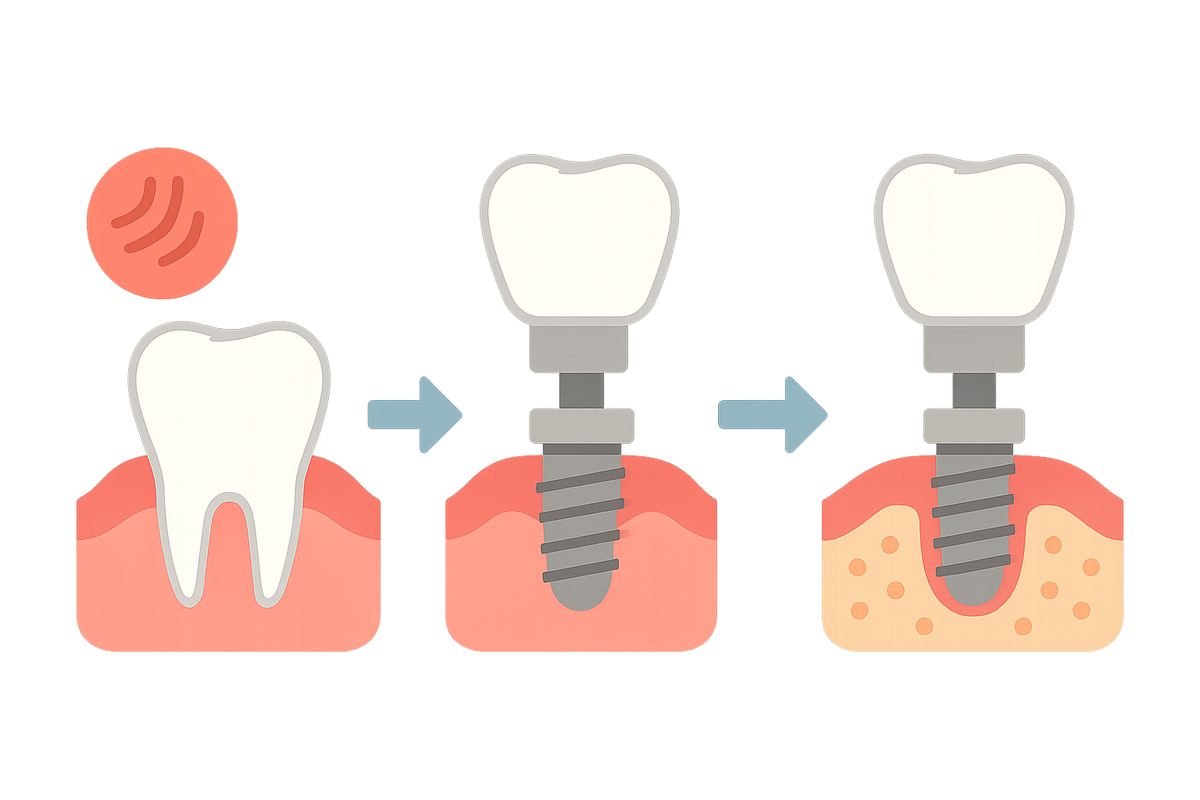
Long-term integration (3–6 months): Bone starts to fuse to the implant (osseointegration). By 3–6 months most patients regain full function and normal sensation, though final restoration timing varies by case.
Which Side Effects Can Become Permanent?
Most implant side effects are temporary. Rarely, some problems can be long-lasting or permanent:
- Permanent nerve damage (paresthesia): If a nerve is injured during surgery, numbness, tingling, or altered sensation can persist. Careful planning reduces this risk.
- Chronic infection / peri-implantitis: Ongoing inflammation around the implant can cause bone loss and may require treatment or removal.
- Sinus complications: Upper implants placed too far into the sinus can cause chronic sinus issues.
- Implant failure: Rarely an implant does not integrate and must be removed; replacement is often possible later.
These serious outcomes are uncommon when surgery follows evidence-based protocols and when patients follow post-op care.
Red Flags: When to Call Your Dentist Right Away
Call your dentist immediately if you have any of these signs:
- Severe, uncontrolled pain not helped by recommended meds
- Heavy bleeding that doesn’t slow after applying pressure
- Swelling that increases after the first 3 days instead of shrinking
- Fever or spreading redness around the face
- Persistent numbness or loss of movement beyond the expected window
- An implant that feels loose or moves
Early evaluation can prevent long-term damage.
How Dentists Minimize the Risk of Lasting Problems
Modern implant care focuses on prevention. Key steps include:
- CBCT imaging and digital planning to map bone and nerves
- Nerve mapping and careful implant placement to avoid nerve injury
- Using bone grafts when needed to support stable implants
- Antibiotic and antiseptic protocols to lower infection risk
- Clear post-op instructions and scheduled follow-up visits
Patient factors matter too: quitting smoking, controlling diabetes, and keeping good oral hygiene all reduce the chance of lasting problems.
Treatment Options for Persistent or Serious Side Effects
If side effects persist, several treatments can help:
- Medications: antibiotics for infection, targeted pain control, or steroids when appropriate
- Professional cleaning and debridement for peri-implantitis
- Periodontal therapy and local antiseptic treatments (including adjuncts like ozone therapy)
- Bone grafting to rebuild lost support
- Referral to a nerve specialist for persistent sensory issues
- Implant removal and later replacement if integration fails or infection won’t resolve
Many problems respond well when caught early.
Questions to Ask Your Dentist About Implant Tooth Side Effects
Bring these questions to your appointment so you know what to expect and how your dentist manages risk:
- What are your complication rates for implants and how many have you placed?
- Will you use CBCT imaging and nerve mapping for my case?
- What steps do you take to prevent and treat peri-implantitis?
- What sedation options are available and recommended for me?
- What is the follow-up care plan if I have ongoing symptoms or complications?
Evidence & Experience: What Research and Expert Care Show
Research shows dental implants have high success rates when placed with proper planning and technique. The risk of serious, permanent complications is low but not zero. Choosing a clinician who uses evidence-based protocols, modern imaging, and documented outcomes lowers your chance of problems and improves rescue options if issues develop.
About Dentistry By Design and How We Address Implant Tooth Side Effects
Dentistry By Design in Midwest City, OK combines experienced doctors, digital planning, and in-house surgical suites to reduce risk and manage side effects promptly. We offer All-on-4®, CEREC® same-day restorations, ozone therapy, and multiple sedation options to improve safety and comfort. Our team emphasizes clear education, careful follow-up, and early intervention to protect your long-term oral health.
Next Steps: If You’re Concerned About Implant Tooth Side Effects
If you’re worried about implant tooth side effects in Midwest City, OK, schedule an evaluation. Early assessment and a tailored treatment plan make lasting problems less likely and improve outcomes when problems arise. A full-service implant practice can answer your questions, plan safely, and respond quickly if side effects occur.