Choosing between dentures and implants is a big decision, and if you’re missing teeth, you already know why it matters. You chew on one side, cover your mouth when you laugh, or smile with your lips closed in photos and hope nobody asks why.
At Dentistry By Design in Midwest City, OK, we know the right choice depends on several factors, from your budget to how much bone you have. This blog gives you a clear, side-by-side comparison of dentures versus implants, so you can make an informed decision that supports both your confidence and your oral health.
How Dentures and Implants Work
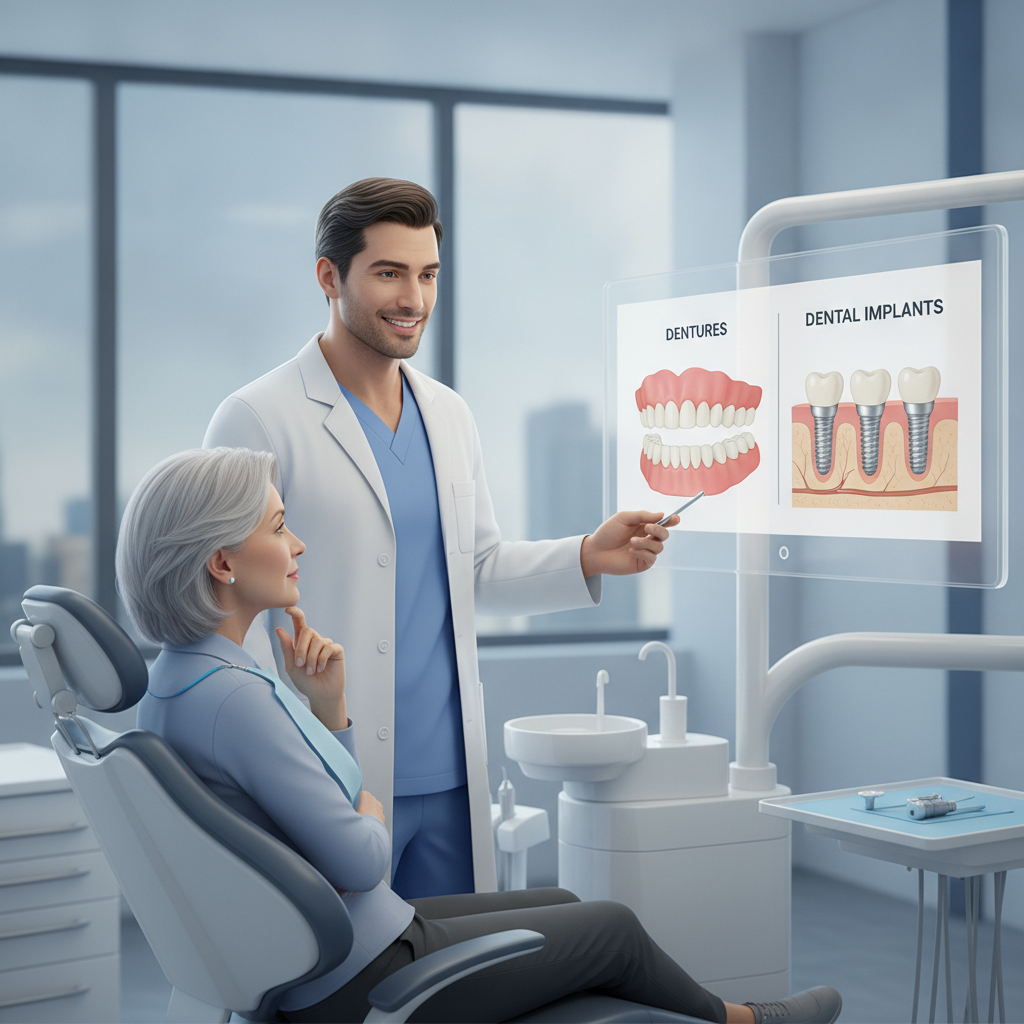
Dentures are removable appliances designed to replace missing teeth and support the surrounding tissues. They can be complete or partial, depending on how many teeth you need to replace. Dental implants, on the other hand, are a more permanent solution. A metal post is placed into the jawbone, where it acts as a root for artificial teeth.
The simplest way to picture the difference is this. Dentures sit on top of your gums, and implants live in the bone, just like the roots of your natural teeth. That one difference affects how each option feels, how long it lasts, and how you take care of it.
What Are Dentures?
Dentures are custom-made replacements that can take the place of a few missing teeth (partial dentures) or an entire arch (complete dentures). They’re typically made from acrylic resin, sometimes combined with metal attachments. Partial dentures use small metal or acrylic clasps that hold onto your natural teeth. At Dentistry By Design, dentures are made in our in-house dental lab from digital impressions, and same-day dentures are available.
What Are Dental Implants?
Dental implants are titanium posts surgically placed in the jawbone, where they serve as roots for crowns, bridges, or full-arch prostheses. This fusion with the bone gives you stable support that doesn’t slip or shift in your mouth. One implant can replace a single tooth, and a few implants can hold a whole arch of teeth.
The Pros and Cons of Dentures
The Benefits of Choosing Dentures
Dentures are generally more affordable than implants, and they offer a non-invasive way to replace missing teeth. There’s no implant surgery involved. They’re also easier to adjust, so changes in your mouth’s structure are easier to accommodate. For some people, especially those who aren’t ready for surgery, dentures are the right place to start.
Potential Drawbacks of Dentures
However, dentures may need ongoing adjustments or replacements over time because your gums and jawbone naturally change after tooth loss. They might not look as natural as implants, and they can slip, causing discomfort or speech difficulties.
In real life, that can mean a denture that moves when you cough hard or bite into an apple, adhesive you keep reapplying, and sore spots where the denture rubs your gums. Every night you take them out, soak them in a cup of water, and put them back in the morning. Many people get used to it, but they never quite stop worrying about it.
The Pros and Cons of Dental Implants
The Advantages of Dental Implants
Implants offer a durable and natural-looking solution. They function like natural teeth and help prevent bone loss in the jaw, which supports a more youthful appearance.
That last part matters more than most people realize. When a tooth is gone, the bone that held it loses stimulation and slowly shrinks. Over time, that can make your face look sunken around the mouth and make dentures fit worse and worse. Implants act as new roots, so they help keep the bone and the natural shape of your face.
Possible Limitations of Dental Implants
The main concerns with implants are the cost and the need for surgery, which can be significant depending on how many implants you need. You also need healthy gums and enough bone to support them, though bone grafting can sometimes help. The process takes longer too, since implants need months to heal before your final teeth go in. If the price scares you, that’s understandable, and it’s worth talking through every option before you decide.
Key Differences in This Denture Implant Comparison
Cost Factors to Think About
Understanding the financial commitment matters. While dentures are less expensive at first, implants may prove more cost-effective over a lifetime because of their durability.
When you compare costs, count more than the first bill. Traditional dentures can mean relines, adhesive, repairs, and new dentures down the road, plus more visits and more of your time. Dentistry By Design works with most major insurance providers and offers flexible financing, and we’ll walk you through it during your consultation.
Longevity and Durability Over the Years
Implants tend to last longer and can last a lifetime with proper care. Dentures eventually need to be replaced as your mouth changes and the material wears, and a reline about every two years helps keep them comfortable in the meantime.
Aesthetics and Functionality in Everyday Life
Implants typically offer a more natural look and feel, and they make speaking and eating easier compared to dentures. You can bite into corn on the cob, chat through a long phone call, or laugh with your whole face without thinking about your teeth.
Making the Right Decision for You
Your choice depends on several factors, including your oral health, jawbone condition, lifestyle, and budget. It’s essential to talk these through with your dentist so you understand which option fits your needs best.
A few questions can help you think it through. How much do slipping or sore gums bother you today? Are there foods you miss? Are you comfortable with a surgical procedure if it means more stability? Do you want teeth you take out at night, or teeth that stay put? There’s no wrong answer, and some people start with dentures and move to implants later.
The Process of Getting Dentures or Implants
Your Initial Consultation Steps
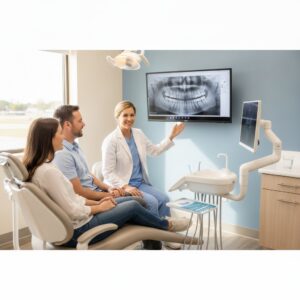
Your first step is a comprehensive exam and consultation to evaluate your dental health, needs, and expectations. For implants, that includes digital X-rays and a cone-beam CT scan to look at your bone, nerves, and sinuses. Bring your questions, and tell us what you want your smile to feel like day to day.
Your Treatment Timeline
Denture fittings usually take a few appointments, with impressions, sometimes a try-in to check the fit, a final fitting, and follow-ups for adjustments. Implant procedures can take several months, including healing time, because implants need about three to six months to fuse with the bone. In many cases, you’ll leave with temporary teeth the same day as surgery, so you’re not going without a smile while you heal.
How We Use Advanced Technology in Implant Dentistry
Our practice uses advanced technology to improve treatment accuracy and patient comfort, so your care is personalized and planned for a successful outcome. Cone-beam CT imaging helps us place implants precisely, digital impressions replace messy trays, and our team handles your implant treatment from consultation to final teeth under one roof. If you’re nervous, sedation options like nitrous oxide, oral sedation, and IV sedation can help you relax.
FAQs About Dentures and Implants
Are dental implants painful?
Implant procedures are done under local anesthesia, which keeps discomfort to a minimum, and sedation is available if you’re anxious. Some soreness and swelling afterward is normal, and many people are back to their usual activities within about 24 hours.
How do I care for my dentures?
Regular cleaning and maintenance are essential to keep your dentures fitting well and clean. Brush them daily, soak them overnight, and keep up with checkups so your dentist can catch fit problems early.
Am I a candidate for dental implants?
Ideal candidates have healthy gums and enough bone to support an implant. If you’ve lost some bone, bone grafting may help, and a consultation will show you what’s possible.
What happens if my denture breaks?
Bring it to your dentist for repair or replacement as soon as possible. Try not to glue it yourself, because home repairs can change the fit and irritate your gums.
Can I switch from dentures to implants?
Yes. Many patients start with dentures and later choose implants for a more permanent solution. Implants can even hold a denture in place, so you get more stability without starting over.
Moving Forward With Confidence
Both dentures and dental implants have their merits, and the right choice is the one that fits your mouth and your life. At Dentistry By Design, our dedicated team can help you decide through a detailed consultation and a personalized treatment plan.
You’ve waited long enough to eat your favorite foods and smile without thinking about it. Contact us today to schedule your appointment, and we’ll help you weigh dentures and implants so you can restore your smile with confidence.